


28 Apr How Custom Outdoor Kitchen Builders Differ
A high-end outdoor kitchen is not a grill island dropped onto a patio. It is a permanent architectural feature that has to cook well, age well, and belong to the home. That is why choosing custom outdoor kitchen builders is less about finding someone who can assemble components and more about finding a team that understands fire, structure, layout, materials, and design at a serious level.
In luxury outdoor living, the difference shows immediately. Some builds look impressive for a season, then reveal weak finishes, poor ventilation, awkward workflow, or materials that were never suited for Florida heat, salt air, and rain. A true custom project should feel intentional from the first sketch to the final firing.
What custom outdoor kitchen builders actually do
The best custom outdoor kitchen builders are not simply installers. They are planners, designers, and craftsmen who understand how every element works together. That includes appliance placement, fuel lines, countertop depth, storage access, clearances, finish selections, weather exposure, and visual proportion.
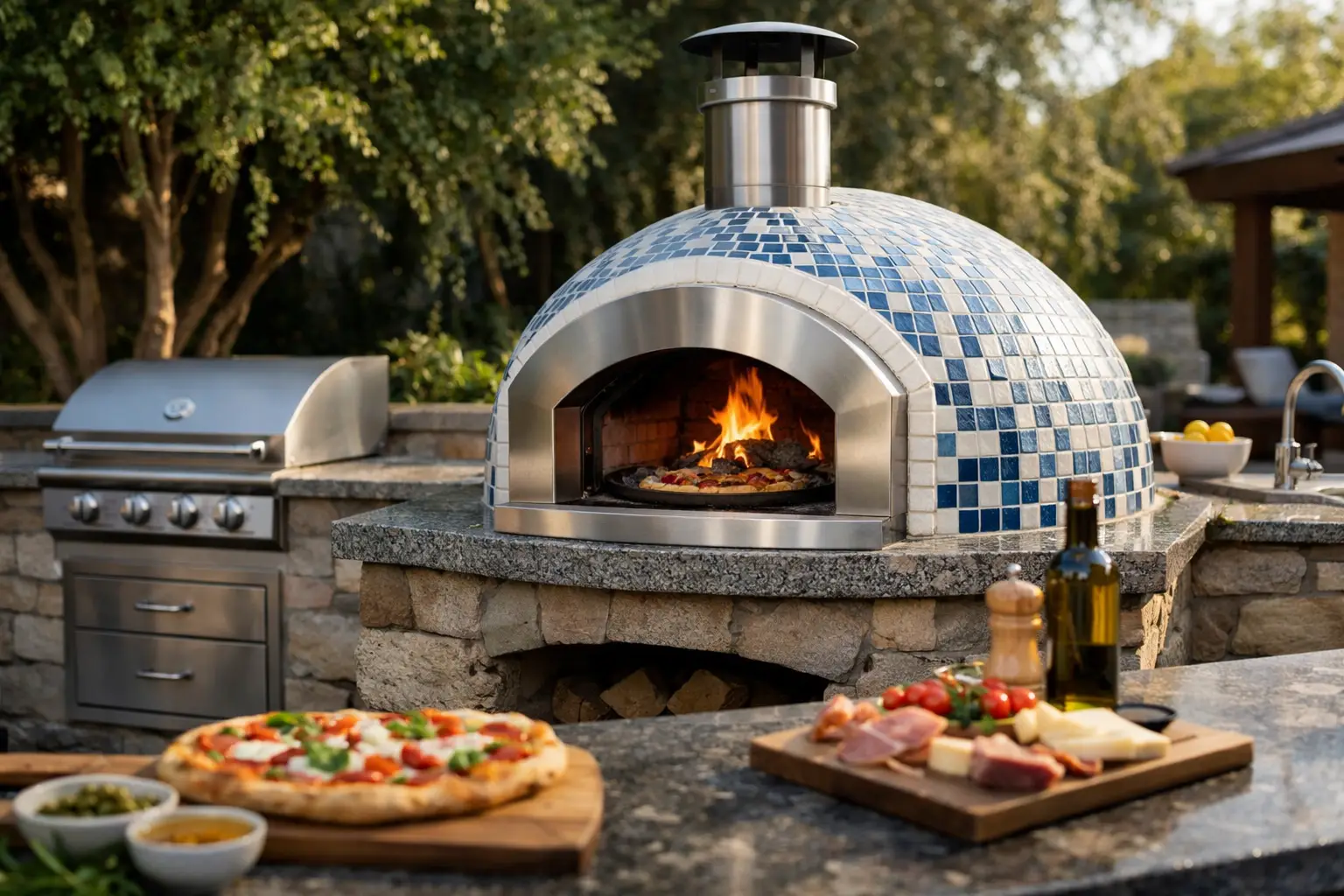
If the kitchen includes a real wood-fired oven, the stakes rise even higher. Masonry ovens introduce weight, heat retention, venting requirements, and performance expectations that prefab islands are not built to handle. A builder who has only worked with modular grill setups may not be equipped to integrate a true pizza oven into the design without compromising either appearance or function.
This is where expertise matters. A luxury outdoor kitchen should not be designed around whatever components happen to fit. It should be designed around how you entertain, what you cook, and how permanent you want the installation to feel.
Why premium custom outdoor kitchen builders cost more
Price matters, but context matters more. Higher-end builders typically cost more because they are solving more problems before construction starts. They are thinking through structural support, finish longevity, heat management, traffic flow, and the relationship between the kitchen and the surrounding architecture.
That planning is not cosmetic. It protects the investment. A beautiful outdoor kitchen with poor function becomes frustrating quickly, while a kitchen built with mass-market materials can lose its finish long before the appliances do.
There is also a major difference between surface-level customization and true custom work. Changing a countertop color or selecting a different door style is not the same as building a kitchen around a handcrafted oven, a specific cooking style, or a property with unique dimensions. Premium builders charge for design intelligence, not just labor.
For affluent homeowners, this is usually the right trade. A backyard kitchen should add presence and utility, not become a renovation project every few years.
The mark of quality in custom outdoor kitchen builders
A serious builder tends to reveal their quality in the details they talk about early. If the conversation is only about appliance packages and stone veneer, that is a warning sign. The stronger conversations usually begin with site conditions, cooking priorities, desired aesthetic, and long-term performance.
Material selection is one of the clearest indicators. Outdoor kitchens in Florida and similar climates need finishes that can handle moisture, UV exposure, and temperature swings without looking tired after one summer. That applies to cabinetry, cladding, countertops, hardware, and every visible surface.
Structural understanding matters just as much. Heavy masonry ovens require proper support. Venting should be planned, not improvised. Combustible clearances must be respected. The kitchen should also feel balanced visually, especially when a statement oven is part of the design. If the oven looks like an afterthought, the whole installation feels compromised.
The strongest builders also know when not to overdesign. More components do not always create a better kitchen. Sometimes a cleaner layout with a premium grill, a real pizza oven, focused prep space, and concealed storage creates a far more elegant result than a crowded island packed with features no one uses.
Designing around the oven, not around leftovers
For clients who want authentic wood-fired cooking, the oven is often the centerpiece, both visually and functionally. That changes the design approach. A true brick oven is not an accessory. It shapes workflow, sightlines, counter placement, serving space, and the overall presence of the kitchen.
This is one of the biggest differences between ordinary installers and experienced custom builders. Standard layouts often treat the pizza oven like a bonus item added at the end. Better builders plan the kitchen around it from the start.
That includes practical questions. Will the oven be used for pizza only, or also for roasting, baking, and live-fire entertaining? Do you want the oven to face guests and become part of the social experience? Should the finish read rustic, Mediterranean, or more architectural and modern? The answers affect everything from footprint to facade materials.
Forno Nardona approaches this category as a permanent luxury installation, not a casual add-on. That distinction matters when the goal is a statement piece with authentic cooking performance and true masonry presence.
What affluent homeowners should ask before hiring
The most useful questions are not about discounts. They are about capability. Ask how the builder handles appliance integration, weather exposure, drainage, structural support, and finish durability. Ask to see projects that reflect your level of expectation, not just any outdoor kitchen they have completed.
It is also smart to ask who is responsible for the design. Some companies sell the vision but outsource most of the execution. That can work, but it can also create disconnects between concept and craftsmanship. In a premium project, clarity matters. You want to know who is making decisions, who is building, and who is accountable when custom details are involved.
If your kitchen includes a wood-fired oven, ask direct questions about masonry experience, venting, and thermal considerations. A builder who is vague here is not the right fit.
Finally, ask how they balance beauty with serviceability. Luxury kitchens still need practical access to utilities, storage, and maintenance points. A polished exterior means little if a simple repair requires dismantling finished work.
A custom build should reflect the property
The best outdoor kitchens feel as if they were always meant to be there. They complement the home’s architecture, respect the proportions of the outdoor area, and create a natural destination for entertaining. That is especially important in coastal and resort-style markets where outdoor living is a central part of the property’s identity.
A poorly matched kitchen can feel imported rather than integrated. This happens when builders rely on generic templates that ignore rooflines, hardscape materials, pool orientation, or the home’s existing design language. A premium kitchen should echo the property, not compete with it.
That does not mean every project has to be traditional. Modern homes can carry dramatic masonry ovens and clean-lined cabinetry beautifully. Mediterranean homes can support richly detailed tile, warm stone, and handcrafted firebrick finishes. The point is coherence. Custom should mean tailored, not simply upgraded.
The trade-offs that matter most
Not every buyer wants the same thing, and good builders will say so. If speed is the top priority, a highly customized project may feel slower than expected. If budget control matters more than one-of-a-kind design, some finish and layout choices may need to narrow. If you want a real masonry oven, installation complexity will be greater than with a lightweight appliance-style alternative.
Those are not drawbacks so much as realities. Premium outdoor kitchens are long-term assets. They ask for more thought upfront because they are meant to deliver more over time.
There is also the question of how you plan to use the space. Some clients entertain often and need a true cooking-and-serving environment. Others want a visual centerpiece that performs beautifully on weekends and holidays. The right builder can accommodate either goal, but only if the brief is honest from the beginning.
Choosing builders who understand permanence
The outdoor kitchen market is crowded with attractive renderings and fast promises. The real measure is whether the builder understands permanence. Can they create a space that performs under real heat, real weather, and real use while still looking like part of a luxury property years from now?
That is the standard worth holding. When custom outdoor kitchen builders know how to combine design discipline, material quality, and genuine fire-cooking expertise, the result is more than an amenity. It becomes one of the defining spaces on the property.
If you are building at the premium end of the market, choose the team that treats the kitchen as architecture, not equipment. You will feel that difference every time the fire is lit and the space fills with people.